Showing posts with label TBI. Show all posts
Showing posts with label TBI. Show all posts
Saturday, 20 October 2012
Traumatic Brain Injury and Youth Crime
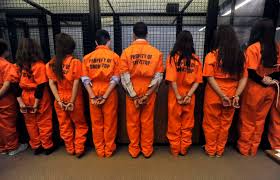
A British report just published makes some surprising and alarming claims. Apparently, 60% of young people in the British justice system custody say they have experienced a traumatic brain injury. The report cites the fact that brain injury is more prevalent in the under 25 age group.This does not mean that brain injury turns those youths into criminals.
The report, was written by Professor Huw Williams and commissioned by the Barrow Cadbury Trust for the Transition to Adulthood (T2A) Alliance. There is a prevalent belief in UK and US legislative authorities that once a person becomes 18 years of age he or she are mature individuals and therefore are responsible for their actions. This is at best unhelpful and at worst a tragedy of the criminal justice system. It can actually prolong the criminal behavior of an individual.
There is a basic misunderstanding of age boundaries. Age limits and restrictions rarely correspond to scientific evidence. A 16-year-old isn’t any more resistant to the damaging effects of smoking than a 14-year-old. As soon as someone reaches a legally determined age, they don’t automatically mature overnight. There is no internal switch that gets flipped.
”Underage pregnancy” is somewhat of an oxymoron – if a female is physiologically capable of becoming pregnant, then she is old enough to reproduce as far as nature is concerned. But society rightly recognizes that just because someone is biologically capable of doing something, they are not necessarily mentally capable of doing it without causing damage to themselves or others. Ensuring an individual is mature enough to understand and handle the consequences of potentially damaging actions is why age restrictions exist.
But this concept of “maturity” is where problems arise. The criminal justice system works under the assumption that, once an individual is 18, they are mature enough to be considered a typical adult.The argument made is that this is not the case, and that young adults should be recognized as a separate group by the criminal justice system, and their cognitive development maturity and socioeconomic factors should be considered fully when processing them, up to and including the court sentencing the individual.
Scientific evidence and a literature review by Birmingham University supports this view. Studies into post-adolescent brain development reveal that brains continue to develop well into our 20s, and these developments are concerned with more complex abilities like: executive functioning and inhibition. The latter overrule our need for immediate reward, moderate our impulsive actions and regulate our emotions. That is what the majority of people would consider signs of maturity.
There is another factor that has a serious impact on cognitive development and behavior of young adults and that is brain injury and trauma.
Head injury is very serious . A concussion is serious, even if it does not cause lasting damage. Any injury to the head that causes even a short period of unconsciousness should be taken seriously, as it could result in a long-term injury. Because of the complexity of the brain and uncertain nature of brain injury, the eventual consequences of traumatic brain injury can vary, potentially leading to disorders such as schizophrenia. Many “criminals” are imprisoned who suffer from schizophrenia. Should they be in prison or under treatment elsewhere?
In younger people brain injury is potentially more damaging, as it can potentially disrupt cognitive development. These disruptions could lead to an increased tendency for criminal behaviour.
Those without a TBI [traumatic brain injury] are more likely to grow out of an immature and antisocial behavior by the time they get to the mid-twenties but those with TBI are likely to continue to grapple with these issues throughout young adulthood and beyond.
There can be no generalization, however, that all youths who suffer from TBI will graduate into a criminal life. Most do not. But in young adults, brain injury increases the likelihood of eventual criminal behavior.
However since there is a tendency for a relationship between criminal behavior and TBI this should be considered when making decisions about sentencing and rehabilitation. Today young people aren’t screened for brain injury and thus it is rare that there would be necessary rehabilitation. As a result, the main contact that many young people with TBI have with those that provide services is via the criminal justice system, which obviously can’t deal with and treat brain trauma.
It is strongly suggested, though, somewhat impractical at this time, that young offenders should be screened for TBI and treated which would then cut the rates of a reoffense and save the taxpayer costs in the criminal justice system.
Interestingly, work is already under way on some tools for determining the mental state and maturity of the offenders, such as targeted questionnaires. But ironically, this would be predicated on the fact that offenders would be honest with those responsible for prosecuting them. This would require a degree of maturity and control. The point made above is that they may lack the trait of honesty.
We should be aware how damaging it can be to demand certain types of behavior from teenagers (and then punishing them based on this) without considering the physiological and cognitive changes they are undergoing.
No one is suggesting that young offenders get away with their crimes but it is necessary to take into account the aspects of developmental maturity and brain injury which can affect their behavior and maybe reduce the likelihood of future crime and punishment.
When Brain injury occurs and there is paresis in a particular limb the most effective physical therapy solutions should be found when the patient is sufficiently recovered.
The newly developed HANDTUTOR and its sister devices (ARMTUTOR, LEGTUTOR, 3DTUTOR) have become a key system in neuromuscular rehabilitation for patients recovering from brain and spinal injuries, Parkinson’s disease, MS, CP and other limb movement limitations. These innovative physical therapy products implement an impairment based program with augmented motion feedback that encourages motor learning through intensive active exercises and movement practice. The TUTORs consist of wearable gloves and braces that detect limb movement showing the patient how much active or assisted active movement they are actually doing. The rehabilitation software uses special games to set a new target for this movement in terms of the patient’s ability to move their limb. The devices then measure the limb movement and give feedback on the success of the patient in trying to gain this new movement objective. In this way the TUTOR system provides exercises that are challenging and motivating and allow for repetitive and intensive exercise practice.
The HANDTUTOR, ARMTUTOR, LEGTUTOR and 3DTUTOR are now part of the rehabilitation program in leading U.S. German, Italian, French, UK and other country’s hospitals and clinics. The TUTORs are available for adults and children from the age of 5 and up and are fully certified by the FDA and CE. They can also be used in the patient’s home through telerehabilitation. See WWW.MEDITOUCH.CO.IL for more information.


Sunday, 2 September 2012
U.S. Army Enters Fight …Against Traumatic Brain Injury
It was reported by the Army News Service on August 31, 2012 that the U.S. Army together with the National Football League will be joining to increase the research into the causes, prevention and treatment of Traumatic Brain Injury (TBI).
An agreement was reached and signed by Army Chief of Staff Gen. Ray Odierno and NFL Commissioner Roger Goodell to continue sharing their resources to combat TBI.
Attending the event were soldiers and players who have had concussions during their service or games. Representatives of the medical corps and 200 cadets also participated.
Ironically it is the tough discipline and feeling of team over self that they are taught which prevents soldiers and players from disclosing that they were injured and from seeking help after a concussion.
These traits make it difficult for individuals to admit that they have a particular problem, especially mental.
Gen. Odierno stated that the goal of the new program is to educate the soldier and player to come forward and be educated that they have to seek treatment both on the battlefield and on the playing field.
The general discussed various examples of how dialogue and the sharing of research can monitor TBI. One of the methods is placing sensors in the helmets that are worn that can detect a concussion after a trauma to the head occurs.
NFL commissioner Goodell told those assembled that basic cultures (of not disclosing concussions) have to change making players and soldiers share their experiences. The importance of disclosing the incident with officers higher in rank needs to take place without fear of retribution just because they disclosed what happened.
Some officers and players told about their personal experiences and how they were reluctant to seek help.
The NFL commissioner stated that not asking for help will no longer be tolerated. That there has to be accountability. That coaches and other players will no longer be able to make the decision. Only medical personnell will be allowed to judge whether a player or soldier can return to duty. Proper leadership and supervision includes allowing this to happen.
” Seeking help is playing smart.” he added.
Both officials said that enough progress hasn’t been made yet and more needs to be done.
There is an Army Directive that stipulates that soldiers have a minimum of 24 hours of downtime and need to get a medical clearance before returning to duty following a blast or vehicle incident.
Maj. Sarah Goldman, program director of Army Traumatic Brain Injury at the Office of the Surgeon General, Rehabilitation and Reintegration Division, stated that more than 13,000 service members sustained some form of concussion since 2010 and 95 percent were returned to duty.
Odierno, admitted that when he played football he would not have sought medical attention for a concussion. “I wouldn’t have taken myself out. Someone else would have had to.” He said that kind of thinking is wrong.
The general added that the army and players have to have a bond to take care of each other no matter what the rank.
When TBI occurs the best physical therapy solutions should be put in place. Currently that includes the TUTOR system.
Victims of brain injury and stroke can benefit greatly from the Tutor system– the HANDTUTOR, ARMTUTOR, LEGTUTOR and the 3DTUTOR. The Tutor system is being used successfully in leading U.S. and foreign hospitals and clinics and is also benefiting home care patients through the use of telerehabilitation.This ensures that the patient is motivated to do more practice between treatments by the therapists.
The newly developed HANDTUTOR and its sister devices have become a key system in neuromuscular rehabilitation and physical therapy for brain injury patients including, post stroke and TBI patients. These innovative physical therapy products implement an impairment based program with augmented feedback that encourages intensive practice and motor learning through active exercises. The exercises are challenging and motivating and allow for repetitive training tailored to the patient’s performance , motor , sensory and cognitive movement ability. Customized simple and powerful rehabilitation software allows the physical and occupational therapist the ability to adjust the program and exercise difficulty to the patient’s movement ability. The system also includes objective quantitative evaluations that allow the physiotherapist and his occupational therapist colleagues to report on the patient’s exercise progress. The TUTOR system is suitable for children as well as adults.
See WWW.MEDITOUCH.CO.IL for further information.

Tuesday, 24 July 2012
The Risks of Mountain Bike Riding
In a microcosm study of mountain bike injuries Zachary Ashwell, a fourth year medical student who has a background in engineering, took statistics of injuries suffered by individuals who rode mountain bikes. An avid biker himself he knows the hazards and pitfalls that a rider can experience especially at Whistler Mountain Bike Park in Canada.
He studied some 898 case reports from the Whistler Health Care Centre 2009 mountain bike season. The specific cases occurred between May 16 and Oct. 12 of 2009.
He found that the typical injury was a 26-year-old male who suffered the injury between 1 and 4 p.m.
Ashwell discovered that 86 per cent of the patients were male, that August is the worst month for injuries, that 12 per cent of the injuries suffered were considered potentially threatening to life, limb or function, and that more than 75 per cent of the bones broken in the bike park were upper body bones.The most severe injuries involved internal bleeding or internal organ injury, spinal cord injury or traumatic brain injury.
Obviously the idea is to have as much safety gear as possible worn by the rider. Of 24 cases where safety equipment was noted only one was documented as not wearing armor. The other 23 were documented as wearing a variety of protective devices beyond a helmet, including knee and elbow pads, full body protective suits and neck guards. At the risk of divulging a possible business idea this writer suggests that someone should invent a kind of ”airbag garment” to protect the mountain bike rider when he falls.
As stated above one of the more severe injuries that can occur to bike riders when they fall is Spinal Cord Injury (SCI) or Traumatic Brain Injury (TBI).
When that occurs and the initial emergency treatment has passed the patient will need the best physical therapy solution to cope with any limb movement disability issue he has. The TUTOR system is in the forefront of such physical therapy products and has been developed to assist patients to get the most intensive exercises so that the limb can return to its former mobility stage (and the patient can again ride his bike??)
The devices (HANDTUTOR, ARMTUTOR, LEGTUTOR, 3DTUTOR) are sophisticated, ergonomic and comfortable gloves and braces and have become a key system in neuromuscular rehabilitation and physical therapy for interactive rehabilitation exercise. The TUTORs are connected to exclusive software that implement an impairment based program with augmented feedback and encourage motor learning through intensive active exercises. The physical therapist records and evaluates the progress made by the patient and designs a customized exercise program for that patient. The TUTOR system, fully certified by the FDA and CE is now part of the rehabilitation program of leading U.S. and foreign hospitals and can be used in clinics in their home through the use of tele-rehabilitation. See WWW.MEDITOUCH.CO.IL for more information.

Sunday, 6 February 2011
Isolated, combined and co-ordinated exercise practice improves functional movement ability in spinal cord injury patients

In the February edition of the Journal of Neuro Engineering and Rehabilitation 2011 http://bit.ly/ggKWEw Dr. Angel Gil-Agudo and his group from the Department of Physical Medicine and Rehabilitation, National Hospital for Spinal Cord Injury Toledo Spain report on Gait kinematic analysis in patients with a mild form of central cord syndrome
Central cord syndrome (CCS) is considered the most common incomplete spinal cord injury (SCI). CCS accounts for approximately 9% of traumatic SCIs. It is characterized by disproportionately greater motor impairment in upper compared to lower extremities.
The gait characteristics of subjects with CCS compared with healthy subjects. The gait pattern of CCS patients showed a decrease of knee and ankle sagittal ROM during level walking and an increase in hip abduction to increase base of support.
The HandTutor, ArmTutor and LegTutor systems incorporate the concept of virtual functional tasks. These tasks allow the patient to be given intensive active exercise practice and targeted movement feedback on the position of one, two or more joints. The HandTutor, LegTutor and 3DT Tutor provide both feedback on the patients movement ability and instructions on how to move the joint in association with another joint. This allows the patient to practice isolated and combined movements of the hip and knee and ankle when they work with the LegTutor and 3DTTutor. When the patient works with the HandTutor and ArmTutor system they practice isolated and combined movements of the shoulder, elbow, wrist and fingers. This allows the patient to do intensive task practice that will teach them how to do coordinated movements of two or more joints. Motor learning that teaches the patient how to move more than two joints in a coordinated pattern will improve functional movement ability and the performance of the everyday tasks e.g. walking and reaching.
Sunday, 14 February 2010
HandTutor used in tele-rehabilitation

The HandTutor is a rehabilitation glove and software which offers impairment orientated training and augmented feedback. The HandTutor rehabilitates fine movements of the hand and wrist by encouraging and motivating the patient to do active and intensive hand exercises. The device is used in hospitals and community clinics as well as through tele rehabilitation. Examples of patients that are treated include, TBI, stroke, spinal cord injury CP, Orthopedic hand and arm surgery, development co-ordination disorders in children etc.
The HandTutor is available worlwide from clinically trained local representatives www.meditouch.co.il
Subscribe to:
Posts (Atom)